

About The Deities
Goddess Samayapuram Mariamman
Samayapuram Mariamman is more than a deity; she represents a motherly figure for millions of devotees. Her worship embodies faith, hope, and resilience, and she is revered as a goddess who listens to prayers and provides timely aid in times of distress.
She is a manifestation of Shakti, the divine feminine energy, and is regarded as the Goddess of Health, Rain, and Prosperity. Her temple in Samayapuram, near Tiruchirappalli (Trichy), Tamil Nadu, is one of the most famous shrines dedicated to her.
According to legend, Mariamman appeared to protect her devotees from the wrath of deadly diseases, offering miraculous healing and safeguarding their well-being. She is believed to shield her devotees from evil forces and natural calamities. Panguni Uttiram: A grand festival in her honor, drawing large crowds to her temple in Samayapuram.
While Samayapuram Mariamman is primarily associated with Tamil Nadu, her worship transcends state boundaries and is observed in various forms across other Indian states, reflecting regional traditions and customs. Here’s how she is worshipped in other states: Andhra Pradesh and Telangana – Known as Poleramma, Mathamma, or Ellamma in different regions.Worshiped as a village goddess (grama devata) and protector against diseases and evil spirits. Karnataka – Known as Maremma or Yellamma, she is worshipped as a goddess of health, fertility, and rain. Kerala – Mariamman is often identified with Bhagavathy, a manifestation of Shakti worshipped in temples like Kodungallur and Attukal. North India – While Mariamman is not as widely worshipped in northern states, her essence is seen in the reverence for goddesses like Sheetala Mata, who is associated with curing smallpox and infectious diseases.
Mariamman worship is integral among Tamil-speaking communities in Africa, Sri Lanka, Malaysia, Singapore, and Mauritius.
Lord Ganapathy
In the Samayapuram Mariamman Temple, Lord Ganapathy (Ganesha) holds a significant place as an integral part of the temple’s worship and rituals. Ganapathy’s shrine is usually located near the entrance or in a prominent area within the temple premises. Devotees worship him first before proceeding to the sanctum of Goddess Mariamman, following the customary practice of beginning all rituals by invoking Lord Ganapathy.
Lord Murugan (Subramanya Swamy)
Lord Murugan in Kalyana Kolam (Wedding Form) is a significant and auspicious depiction of Lord Murugan, also known as Kartikeya, the Hindu god of war, wisdom, and victory. In this form, he is shown in the state of divine matrimony with his consorts, Deivayanai (Devayani) and Valli, symbolizing the union of spiritual and material fulfillment.
Kalyana Kolam showcases Murugan as a loving and compassionate deity who embraces all aspects of life. The depiction emphasizes the importance of balance in life—spiritual aspirations must coexist with worldly responsibilities. Worshiping Murugan in this form is believed to bring marital harmony, fertility, and family prosperity. Devotees often pray for resolving issues in their marriages, finding suitable life partners, or strengthening familial bonds.
Murugan in Kalyana Kolam represents divine love, harmony, and the integration of worldly and spiritual pursuits, making this form deeply cherished by devotees seeking holistic blessings in their lives.
Lord Muneeswaran

Muneeswaran, also known as Muniandi or Muneeswarar, is a revered deity in South Indian and Tamil folk traditions. He is worshipped as a powerful guardian
deity (Kaaval Deivam) and is associated with protection, healing, and justice. Muneeswaran is venerated primarily in rural areas and among Tamil
communities in India, Sri Lanka, Malaysia, Singapore, and other parts of the world.
Muneeswaran is seen as a vigilant guardian who protects the community from evil forces, diseases, and other calamities. He is also invoked for justice,
with devotees seeking his intervention in resolving disputes and upholding truth. His presence is believed to bring peace, prosperity,
and well-being to the community.
Temples and shrines dedicated to Muneeswaran are typically simple and located at the outskirts of villages, near fields, or in sacred groves.
These sites are essential cultural and spiritual hubs where the community gathers to perform rituals and celebrate festivals.
Lord Karuppannasamy
Karuppannasamy, also known as Karuppu Sami, is a revered deity in South Indian rural and folk traditions, particularly among the
south Indian communities. He is considered a fierce guardian deity (Kaaval Deivam) known for his protective nature and his role in maintaining
justice and order within the community.
Karuppannasamy is considered a vigilant protector who oversees the welfare of the village or community. He is believed to safeguard against
evil spirits, diseases, and other calamities. People seek his intervention for justice, often resolving disputes by invoking his name and swearing
oaths in his presence.
Temples and shrines dedicated to Karuppannasamy are usually simple and unassuming, often located at the entrance of villages or near sacred groves.
These sites serve as important cultural hubs where traditional practices and folklore are kept alive.

Lord Ayyanaar
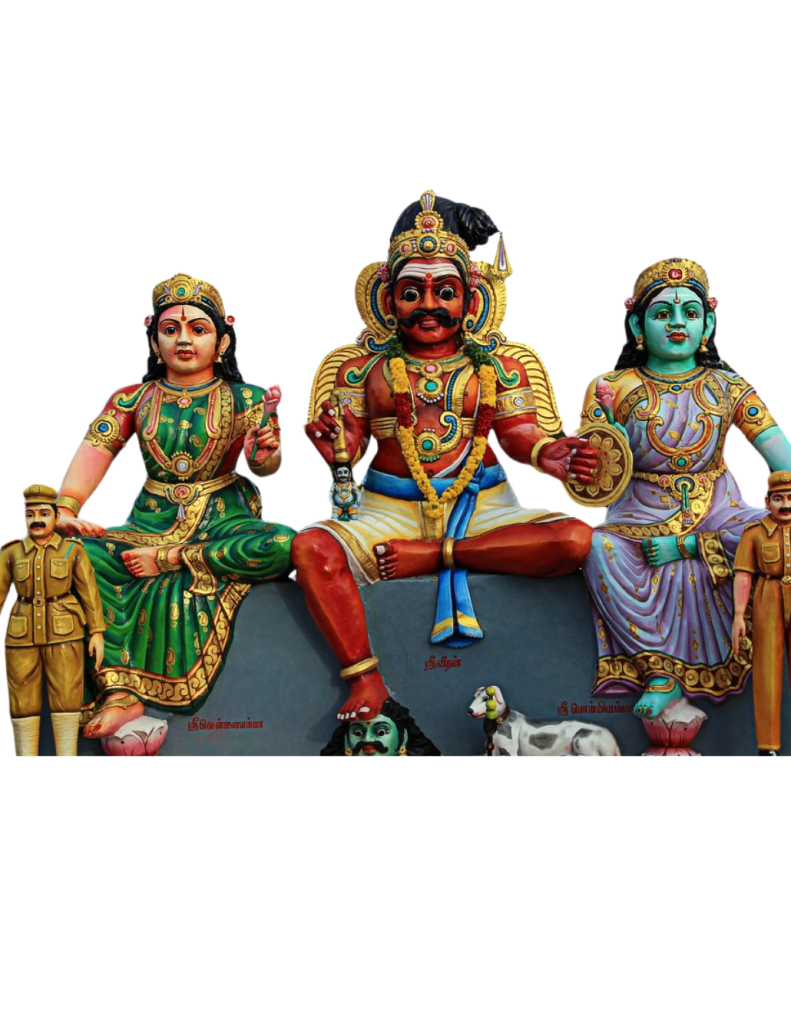
Ayyanaar, also known as Aiyanar or Ayyanarappan, is a prominent deity in South Indian rural and folk traditions, particularly among Tamil communities.
He is revered as a guardian deity (Kaaval Deivam) and is known for his protective and benevolent nature. Ayyanaar is often worshipped in the outskirts
of villages, where he is believed to watch over the community and its boundaries, ensuring safety and prosperity.
Ayyanaar is venerated as a benevolent protector who safeguards the village from harm, including evil spirits, diseases, and natural calamities.
He is also considered a deity of fertility and prosperity, ensuring good harvests and the well-being of the community.
His role extends to maintaining social order and justice, with villagers often seeking his intervention in resolving disputes and conflicts.
Temples and shrines dedicated to Ayyanaar are usually located at the peripheries of villages, in fields, or near forests.
These shrines are often simple structures, but they are richly adorned with terracotta statues and other offerings. The temples serve as vital centers for community worship, cultural events, and traditional ceremonies.